


The Cattle Are Back! 18 English Longhorn Cattle Return to Formby’s Dunes to Help Restore Precious Grasslands
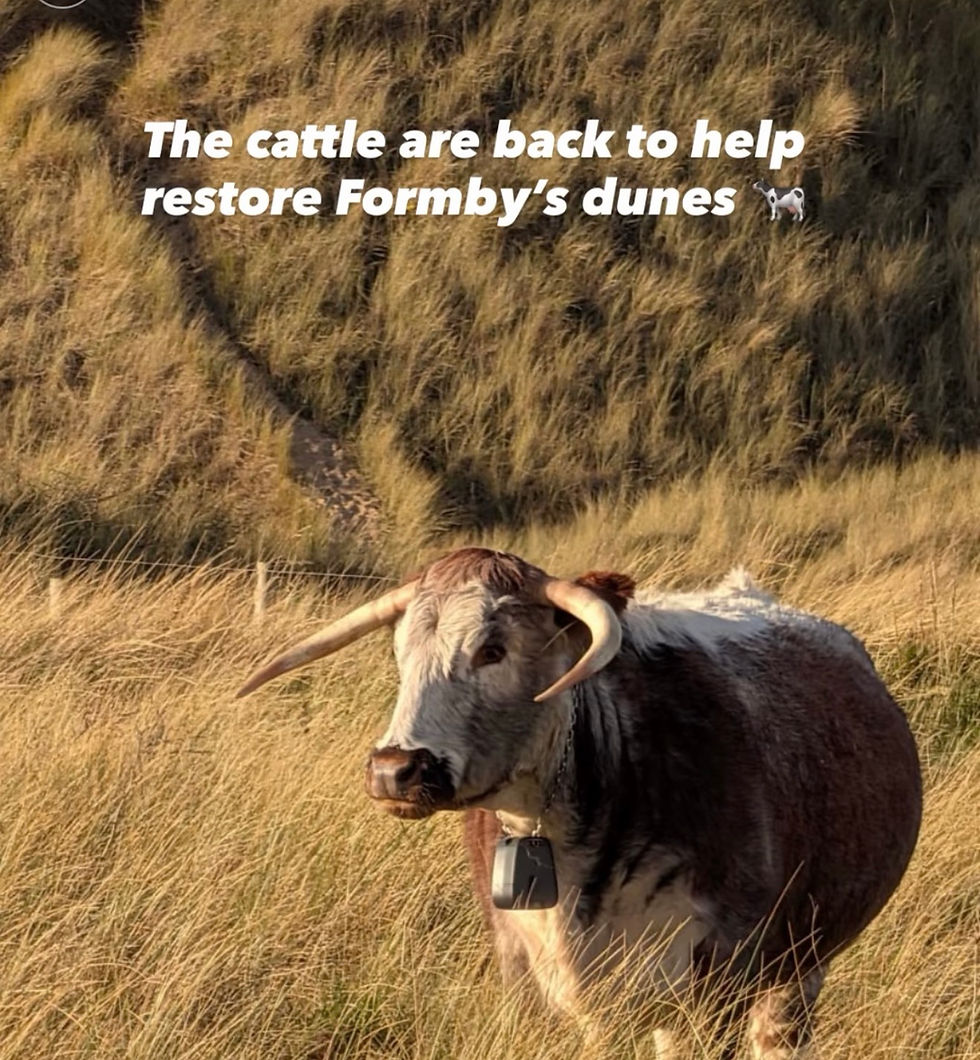
Visitors to Formby’s beautiful coastline may notice some rather unusual residents over the coming weeks, as English Longhorn cattle return to the sand dunes for another winter of conservation grazing.
The National Trust has announced that eight English Longhorn cattle have arrived at Formby, with a further ten expected to join them in the next couple of weeks, bringing the total herd to 18.
The cattle are returning as part of an important conservation project designed to restore and protect Formby’s dune grasslands, helping to preserve one of the area’s most treasured natural landscapes.
Why Are Cattle Grazing on Formby’s Sand Dunes?
Although seeing cattle wandering through the dunes might seem unusual, these magnificent animals have an important job to do.
Over time, dune grasslands can become overgrown with coarse grasses and other vegetation, which can threaten the delicate balance of plants and wildlife that depend on this unique coastal environment.
By naturally grazing the land, the cattle help control excessive vegetation growth, allowing a greater variety of wildflowers and native plants to flourish.
Their hooves also disturb small patches of ground, creating opportunities for seeds to germinate and encouraging greater biodiversity.
This traditional method of conservation grazing provides a natural and environmentally friendly way of managing the landscape.
A Successful Partnership Returns for Another Winter
The National Trust is continuing its partnership with Lancashire Wildlife Trust following a successful trial of conservation grazing at Formby last winter.

The return of the cattle marks another important step in the ongoing efforts to restore the dune grasslands and protect the area’s wildlife for future generations.
English Longhorn cattle are particularly well suited to conservation grazing. Their hardy nature allows them to cope with outdoor conditions, while their grazing habits help maintain a varied landscape.
With their distinctive sweeping horns and impressive appearance, they are also quite a sight for anyone enjoying a walk through the dunes.
Where Can You See the Cattle?
The cattle will be grazing in an area south of Lifeboat Road in Formby, and visitors are welcome to continue exploring the area.
The National Trust has installed information signs offering advice on how to enjoy a safe walk around the grazing cattle.
The signs also feature a QR code that visitors can scan to check the herd’s live location, making it easier to find out where the animals are grazing.
Anyone visiting the area is encouraged to give the cattle plenty of space, avoid approaching or feeding them and keep dogs under close control.
Helping Protect Formby’s Natural Heritage
Formby’s coastline is internationally important for its sand dunes, rare habitats and wildlife.
Conservation projects such as this play a vital role in protecting the landscape and ensuring that its unique natural environment continues to thrive.
The return of the English Longhorn cattle is another wonderful example of how traditional land management methods can support modern conservation efforts.
With eight cattle already settling into their winter home and another ten on the way, visitors to Formby’s dunes have some very special residents to look out for over the coming months.
If you are heading out for a walk around Lifeboat Road, keep your eyes peeled. You might just spot these magnificent animals helping to look after our beautiful coastline.
Photographs: National Trust


.jpg)


Comments