

Huge Marsh Brows apartment block begins to reshape Formby skyline after years of planning battles
Former dairy site enters a new chapter as Marsh Brows apartment development takes shape.

The striking steel frame rising behind Formby railway station has become one of the most talked about developments in our Bubble, with many residents asking what is being built and how the project came about.
For generations it was simply known as the old dairy.
Nestled between Marsh Brows, Duke Street and the Liverpool to Southport railway line, the site formed part of everyday life in Formby. Hundreds of commuters walked past it on their way to and from the station, while residents living nearby barely gave it a second thought as it quietly carried out its role within Formby.
Today, that familiar site has been transformed into one of the largest residential developments seen in Formby in recent years.

The steel frame now rising behind Formby railway station has become impossible to ignore, prompting countless questions from local residents wondering exactly what is being built and how such a significant development came to occupy such a small residential location.
A site with a long history
Long before construction began, 5 Marsh Brows was home to the former dairy, a commercial site that many long standing residents remember well.
As businesses changed and the dairy eventually ceased operating, the buildings became vacant. For years, the site remained largely unchanged, becoming one of the last significant brownfield sites close to Formby village centre and railway station.
Its location made it attractive for future redevelopment. Just a short walk from shops, public transport and local amenities, it represented an opportunity to bring a disused commercial site back into use.
What nobody knew at the time was that redevelopment would become one of the most discussed planning proposals Formby had seen for many years.
The first plans
In 2017, plans were submitted to Sefton Council seeking permission to demolish the former dairy buildings and replace them with a substantial apartment development.
The application was submitted by Mike McComb, through McComb Property Company Ltd, and the company has remained behind the development throughout its planning journey and construction.
The original proposal immediately attracted attention because of the scale of the building being proposed.

Unlike the surrounding streets, which are made up largely of detached and semi detached family homes, the development proposed a modern apartment building rising several storeys above neighbouring properties.
For many residents, it represented one of the biggest changes ever proposed for Marsh Brows.
A community divided
As with many major planning applications, opinion was split. Some residents welcomed the prospect of seeing a long vacant commercial site regenerated and brought back into use.
Others were concerned about the size of the proposed development and what it might mean for the surrounding area.

During the planning consultation, numerous letters of objection were submitted to Sefton Council.
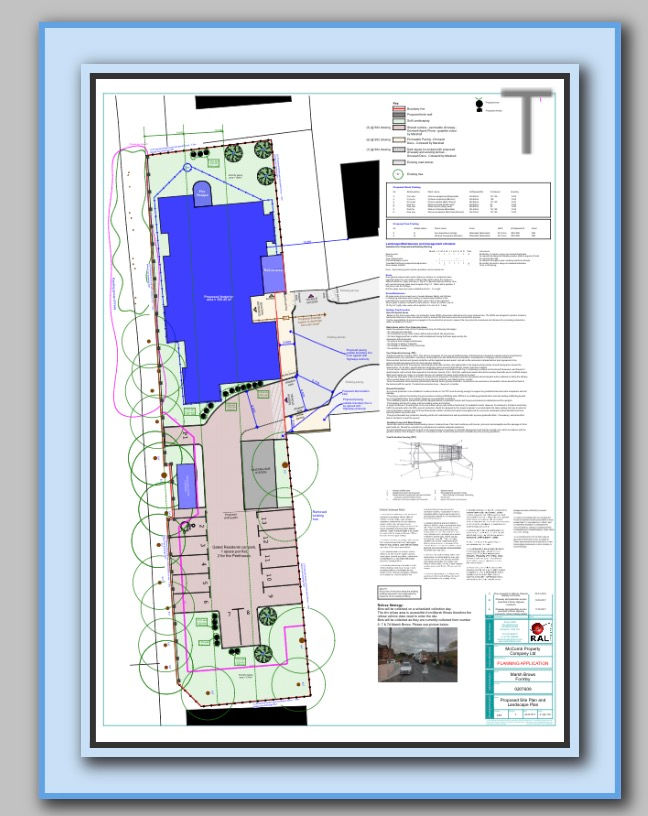
Among the concerns raised by local residents were the height of the building, its overall scale, overlooking of neighbouring properties, parking pressures, increased traffic, loss of privacy and whether the design was appropriate for its surroundings.
Formby Civic Society also submitted objections during the planning process.
The Society questioned whether the scale of the proposal was suitable for the site and expressed concerns about its visual impact within Marsh Brows and the wider character of the area.
These views formed part of the official planning process and were considered alongside all other planning matters before a decision was reached.
The planning process
Large developments rarely receive approval overnight and this scheme was no exception.
Planning officers assessed the application against local and national planning policies, considered the objections that had been received and examined technical reports covering a wide range of issues.
These included highway safety, drainage, landscaping, ecology, contaminated land, residential amenity, parking provision, design, sustainability and the relationship between the proposed building and neighbouring properties.
Following that assessment, planning officers recommended the application for approval, subject to numerous planning conditions.
Sefton Council subsequently granted planning permission. As with all planning decisions, approval did not mean every resident agreed with the outcome, but it did mean the development had satisfied the Council’s planning policies and legal requirements.
The plans evolved
The scheme did not remain exactly as originally proposed. During the planning process the design evolved through revised drawings and amended applications.

While many people continue to describe the development as a four storey building because of the stepped appearance, the approved scheme is classed as a five storey apartment building.
When complete it will provide 13 apartments, including a penthouse apartment on the upper floor.
The development also includes private parking, cycle storage, landscaping and improvements to pedestrian access around the site.
Years behind the scenes
Although planning permission was granted several years ago, construction did not begin immediately.
Instead, the project entered another lengthy phase that is often unseen by the public.
Before work could commence, the developer was required to satisfy numerous planning conditions covering matters including contaminated land investigations, drainage strategies, construction traffic management, landscaping details, privacy screening, highway improvements, pedestrian safety and acoustic protection because of the site’s close proximity to the railway line.
Additional applications were later submitted to discharge these planning conditions before construction could move forward.
While these technical stages rarely attract public attention, they form an essential part of the planning system and can often take years to complete.
The building taking shape today

With the steel frame now largely complete, residents are seeing the true scale of the development for the first time.
Construction specialists explain that steel framed buildings often appear much larger during this phase because only the structural skeleton is visible.
Without brickwork, glazing, balconies and external finishes, the framework creates a much stronger visual impact than the completed building eventually will.
Even so, the development is expected to remain one of the most prominent residential buildings in Formby because of its position overlooking the railway station and surrounding streets.
A changing Formby
Like every generation before it, Formby continues to evolve.
Former schools have become housing.
Large private homes have made way for smaller developments.
Commercial premises have found new uses.
The Marsh Brows development represents another chapter in that continuing story.
For some, it is an example of bringing a long vacant brownfield site back into productive use and providing new homes close to public transport.
For others, it represents a significant change to the character of an established residential area.
Those differing opinions formed part of the planning process and were carefully considered before permission was granted.
A new landmark
As construction continues, one thing is already clear.
The former dairy has now passed into history.
In its place stands a development that has taken almost a decade to progress from planning application to reality and one that is likely to become one of the most recognisable modern residential buildings in Formby.

Whether viewed as an important regeneration project, a striking new addition to the village or simply another stage in Formby’s continuing evolution, the building has already secured its place in the history of Marsh Brows.
Editor’s note: This article is based on publicly available planning records and documents published by Sefton Council relating to the redevelopment of the former dairy site at 5 Marsh Brows. It reports the planning history of the development and the representations made during the statutory planning process.


.jpg)


I haven't lived in Formby for a number of years - my parents were forced to move out because of ill health and I last visited some years ago, after Dad's death. I do understand the need for more housing and Formby is a great place to live, so redeveloping a former commercial site is a good idea. However, the style reminds me of any number of office parks I have seen in the south of England and doesn't in any way represent the feeling of 'home' which I associate with Formby. Formby deserves new buildings which blend in with its unique character.